Is Home Coffee Machine Worth Selling?
Based on 60+ Reddit posts across 3 communities: Home Coffee Machine scores 5/10 — proceed with caution. Huge, high-intent category, but the obvious improvements are already owned by Moccamaster, OXO, and Ratio; the only realistic entrant angle is an affordable, plastic-free, genuinely durable brewer that undercuts a $799 incumbent.
Opportunity Score
Huge, high-intent category, but the obvious improvements are already owned by Moccamaster, OXO, and Ratio; the only realistic entrant angle is an affordable, plastic-free, genuinely durable brewer that undercuts a $799 incumbent.
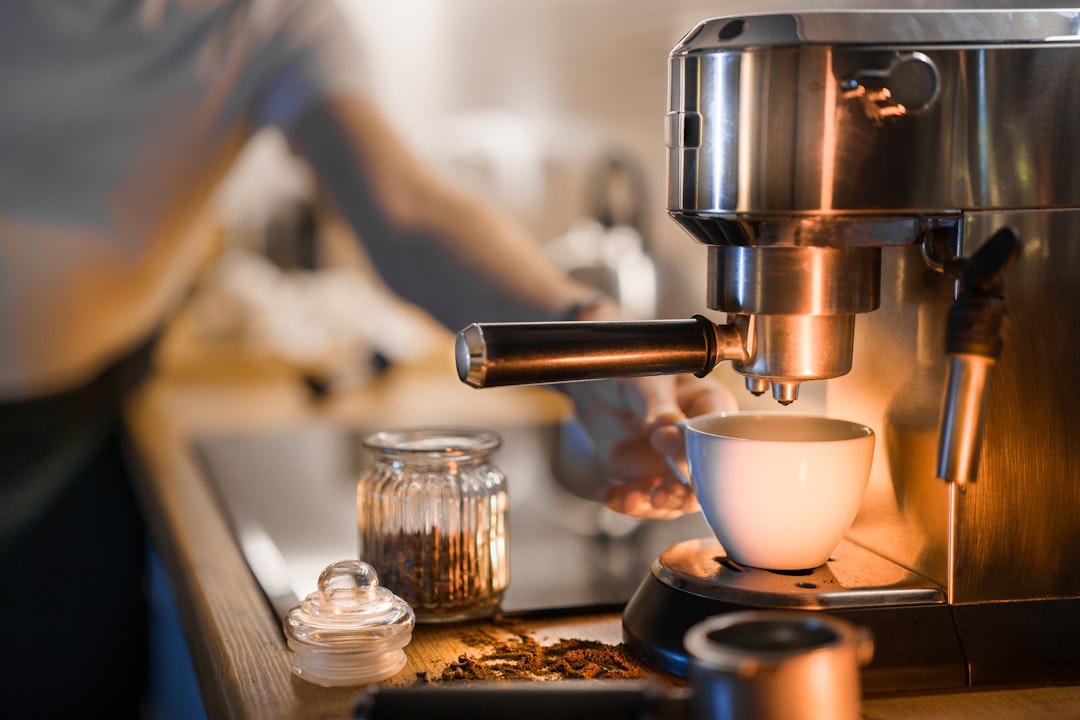
Photo by Jakub Żerdzicki on Unsplash
Demand Validation
Coffee machine threads are among the most active in r/Coffee, r/espresso, and r/BuyItForLife, regularly drawing 80-200 comments. Buyer intent is unusually high: posts are dominated by 'which should I buy / is it worth it' decision language and 'mine died, what now' replacement urgency. The defining signal is that when buyers ask for a durable machine, the community repeatedly steers them away from machines entirely toward manual brewers (Aeropress, pour-over, French press) — a sign the machine category itself has a trust problem an entrant can exploit.
At a Glance
Verdict
Proceed with caution
Top buyer complaint
Buyers don't trust coffee machines to last, distrust plastic touching their coffee, and resent paying premium prices for the only products that solve either.
Best opening angle
Lead with 'no plastic in the brew, no scorched coffee, parts you can actually replace' at a price the premium brands won't touch — durability and health, not features or smart screens.
Research depth
60 posts across 3 communities
Seller Insight
Who should sell this
Sellers with real small-appliance manufacturing depth, food-grade stainless sourcing, UL/ETL certification capability, and the QC discipline to credibly claim durability against repair-friendly incumbents.
Who should avoid this
Generic dropshippers and anyone rebadging a stock hot-plate drip maker or unbranded entry espresso unit — buyers in this category openly distrust cheap machines and will steer each other toward manual brewers instead.
Best positioning angle
Lead with 'no plastic in the brew, no scorched coffee, parts you can actually replace' at a price the premium brands won't touch — durability and health, not features or smart screens.
Competition note
Concept fully validated but the high ground is taken: Moccamaster owns repairability ($99 flat repair + full parts catalog), Ratio owns plastic-free, OXO/Bonavita own SCA-certified drip. New entrants compete on price against brands whose entire identity is longevity — a hard, low-moat position unless quality is genuinely proven.
Pricing band
$40-180 (mass entrant); incumbents $300-800
Margin potential
low
Shipping complexity
medium
Return risk
high
Seasonality
low
Pain Points — 5 identified
Machines die in 1-3 years, even premium ones
The single loudest complaint. Smart Keurigs fail in under a year; premium Fellow grinders and kettles die just past warranty; buyers describe a childhood of 'replacing machines every couple years.' Trust in the whole category is low, and warranty cliffs plus non-repairability turn a $300 purchase into a recurring expense.
“We 'upgraded' to a newer 'smart' Keurig and it was the worst pos of my life. Had it for less than a year before replacing it.”
“The kettle broke within a couple of weeks of the warranty expiring... the grinder just stopped working, losing power and stalling. Not cheap, expected them to last 5 years. I feel like I got ripped off.”
“After an entire childhood of my family replacing machines every couple of years I learned to be better.”
Cheap drip makers burn the coffee on the hot plate
On 'mr-coffee-type' machines a single heating element doubles as water heater, pump, and warming plate. Left on, it evaporates and scorches the coffee within 45-90 minutes, producing a burnt/caramelized off-taste. Reviewers note the good drip makers all switched to thermal carafes — but the cheapest tier still ships glass-carafe-on-hot-plate.
“Why does the hot plate at the bottom get so hot? It literally evaporates the coffee out of the pot, and after an hour and a half you will be left with toxic sludge... a burnt/carbon/caramelized taste in your cup that shouldn't be there.”
“The simple mr-coffee-type machines use a single heat source: it functions as the hot plate, the water heater, and the pump. It is most problematic on small pots where it can be a LOT of heat going into a small amount of coffee.”
Buyers actively distrust plastic in the brew path
A recurring, almost ideological complaint: water and coffee touching plastic tubing, reservoirs, and pods. Buyers cite microplastics and 'no plastic' as a top requirement, and the community's default answer is to abandon machines for glass/steel manual brewers. This is now a named retail category ('non-toxic coffee makers').
“The most important thing to us is no plastic.”
“I am looking for a new brewing method with no plastic involved that is quick, simple, and produces an ok cup of coffee. Currently have a k-cup situation and it's ass.”
“Glass French press is the only thing that is essentially mindless with no plastic parts that is cheap... The other option I know of is the Ratio 8. No plastic in hot water path but it's $$$$$.”
Entry espresso machines have a punishing grind window
Beginner espresso machines (Breville Bambino is the lightning rod) either dribble nothing or over-pressurize and blow the portafilter off. The root cause is usually grind size / pressurized-basket confusion, but the buyer experiences it as the machine 'breaking.' Threads with 70-194 comments show how steep the entry curve is — and how a poorly matched grinder makes any cheap machine look defective.
“When I ran the machine, only a few drops of espresso came out... all of the water had soaked in and nothing came out.”
“There was a build up of water and pressure, causing it to explode all over... Only works with coarse non-espresso ground.”
Descaling and cleaning friction quietly kills machines
Neglected scale fully occludes boilers and tubes, dropping flow to a drop per second and bricking machines. Cleaning is described as a chore steep enough to put buyers off owning a machine at all. Maintenance complexity is both a durability problem and a barrier to purchase.
“The scale was mobilized and fully occluded the tubes... flow was reduced to one drop every second. I had to open it up all the way in order to clean everything out.”
“Hoffmann's video about cleaning espresso machines... kinda turned me off from getting one.”
Seller Opportunities
Affordable plastic-free / non-toxic drip brewer
mediumAll-stainless and glass water path, no plastic tubing or reservoir, positioned at $120-180 — undercutting the $799 Ratio Eight and niche $300+ plastic-free startups while serving the loud 'no microplastics' demand. The wedge is price, not concept: the category is validated (Serious Eats now publishes a 'best non-toxic coffee makers' roundup) but every credible option is premium.
Genuinely good cheap thermal-carafe drip maker
mediumDrop the glass-carafe-on-hot-plate design entirely for a double-wall stainless carafe that actually retains heat and pours without dripping. Target the $40-70 tier where buyers still get burnt-coffee glass machines, with honest 'keeps coffee hot 4 hrs, never scorched' messaging. Differentiation is execution of the carafe (seal, spout, retention), since cheap thermal carafes commonly leak and lose heat.
Beginner espresso kit: machine + matched grinder + forgiving basket
lowSell the entry machine bundled with a capable grinder and a clearly-labelled pressurized basket plus a one-page 'why your shot dribbled' guide, so the buyer never hits the dribble/explosion failure that makes cheap machines look broken. The value is de-risking the setup, not redesigning the brew engine — a bare cheap machine reproduces the exact Bambino complaints.
Why hasn't this been done?
Buyer pain is real, but that doesn't make every opportunity viable. For each opportunity above, here's the supply-chain or business-model reason it isn't already on the shelf.
Affordable plastic-free / non-toxic drip brewer
high confidenceWhy not done yet
The credible players priced themselves up because an all-stainless brew path is genuinely costly: Ratio sells the Eight at $799 and even premium brands like Moccamaster publicly defend keeping some plastic ('where we use plastics, they are the best product for optimal performance'). A dedicated plastic-free startup exists but sells direct at pre-sale pricing, not mass-market price. Nobody has hit $150 because the BOM and the marketing-claim liability are both higher.
Cost / supply-chain impact
Food-grade stainless water tubing, a steel or borosilicate reservoir, and a stainless boiler push BOM roughly 40-70% over a standard PP-tubing drip maker, and add brazing/welding steps absent from injection-only lines. To hit $150 retail at healthy margin you need volume and a tightly controlled SS supplier; 'non-toxic' claims (BPA/PFAS-free) also invite testing/certification cost and listing-takedown risk if unsubstantiated.
Business-model conflict
None identified for the seller, but the category leader's whole brand is repairability + longevity, so a cheap entrant competes on the one axis (price) while being weaker on the other (proven durability) — buyers in this niche specifically distrust cheap.
Genuinely good cheap thermal-carafe drip maker
high confidenceWhy not done yet
It's not a new idea — it's the proven mid-market design. Serious Eats found 'the best ones all had thermal carafes' (OXO 9-Cup, Ratio Six, Bonavita) and eliminated glass-carafe machines for scorching. The reason cheap ones stay bad is that a thermal carafe that actually retains heat and pours cleanly is hard to make cheaply; the failure mode at the bottom of the market is a carafe that leaks and goes cold, not the absence of a carafe.
Cost / supply-chain impact
A double-wall stainless vacuum carafe adds roughly $4-8 BOM over a glass carafe and removes the warming-plate element (a small offset). The engineering risk is the carafe lid/spout seal and brew-through valve, where cheap units fail; getting that right is a tooling and QC investment, not a material one. Net BOM up ~15-25% versus a basic glass drip maker.
Business-model conflict
None identified.
Beginner espresso kit: machine + matched grinder + forgiving basket
medium confidenceWhy not done yet
The 'broken' Bambino reports are overwhelmingly grind/technique problems, not machine defects — the community's fix is always 'use the single-wall basket', 'grind coarser', or 'get your own grinder.' Real forgiveness tech (pre-infusion, adjustable OPV) lives in $1-2k enthusiast machines (Lelit, Profitec, Gaggia GT), not the entry tier, so a cheap machine can't engineer the problem away. Bundling a capable grinder is the only cheap lever, and grinders are themselves a contested, margin-thin category.
Cost / supply-chain impact
Bundling a usable entry burr grinder adds roughly $40-90 BOM and a second SKU/box, materially raising landed cost and shipping weight; a too-cheap grinder reintroduces the exact dribble/channeling complaints and tanks reviews. Margin is squeezed from both sides — buyers anchor the bundle price to the bare machine.
Business-model conflict
Espresso buyers are a self-upgrading segment: many treat the entry machine as a stepping stone and resell it (Facebook Marketplace threads are common), so loyalty and repeat purchase are weak and the bundle's perceived value erodes once the buyer learns grinders matter more than machines.
Manufacturing Profile
Process
injection moldingMaterial
Differentiation
materialNo mold change needed
Requires mold change
Seller Verdict
This is a real, validated category with loud pain, but it is a trap for most sellers: the durability, plastic-free, and repairability fixes that buyers want are exactly what entrenched brands already sell, and they out-trust any newcomer at price. The one defensible move is an affordable plastic-free / non-toxic drip brewer that credibly undercuts the $799 Ratio — and only if you can actually back the durability claim with certification and stocked spare parts. Electronics return risk and head-to-head competition with repair-friendly incumbents make this a 'pursue only with manufacturing depth and a sharp price-plus-trust story' opportunity, not an easy win.
Related Reports
Grill Cleaning Brush & Scraper
A mature, crowded category where the core 'safe AND effective' problem is real but the obvious product (a better grill brush) is already saturated by editorial-pick incumbents; the only durable openings are scraper/chainmail durability plays and price/fulfillment execution against weak DTC brands.
Home & KitchenElectric Egg Cooker
A validated, high-demand commodity with vocal fan communities (ADHD, low-energy, meal-prep), but the category is deeply price-compressed (~$15-20) and the most attractive differentiators (stainless, non-toxic) are already on Amazon — wins come from positioning and incremental design, not a greenfield gap.
Home & KitchenPortable Folding Lap Desk
Lap desks have consistent demand but the market is crowded with generic options — the real gap is in size (users can't find desks wide enough for gaming laptops + mouse) and stability for non-standard postures like cross-legged or side-lying.
Frequently Asked Questions
Is Home Coffee Machine worth selling in 2026?
Huge, high-intent category, but the obvious improvements are already owned by Moccamaster, OXO, and Ratio; the only realistic entrant angle is an affordable, plastic-free, genuinely durable brewer that undercuts a $799 incumbent.
What are the biggest problems buyers have with Home Coffee Machine?
Machines die in 1-3 years, even premium ones; Cheap drip makers burn the coffee on the hot plate; Buyers actively distrust plastic in the brew path; Entry espresso machines have a punishing grind window; Descaling and cleaning friction quietly kills machines.
What is the best market opportunity for Home Coffee Machine sellers?
Lead with 'no plastic in the brew, no scorched coffee, parts you can actually replace' at a price the premium brands won't touch — durability and health, not features or smart screens.
What do Reddit users say about Home Coffee Machine?
Coffee machine threads are among the most active in r/Coffee, r/espresso, and r/BuyItForLife, regularly drawing 80-200 comments. Buyer intent is unusually high: posts are dominated by 'which should I buy / is it worth it' decision language and 'mine died, what now' replacement urgency. The defining signal is that when buyers ask for a durable machine, the community repeatedly steers them away from machines entirely toward manual brewers (Aeropress, pour-over, French press) — a sign the machine category itself has a trust problem an entrant can exploit.
Research coverage
Communities
Search terms